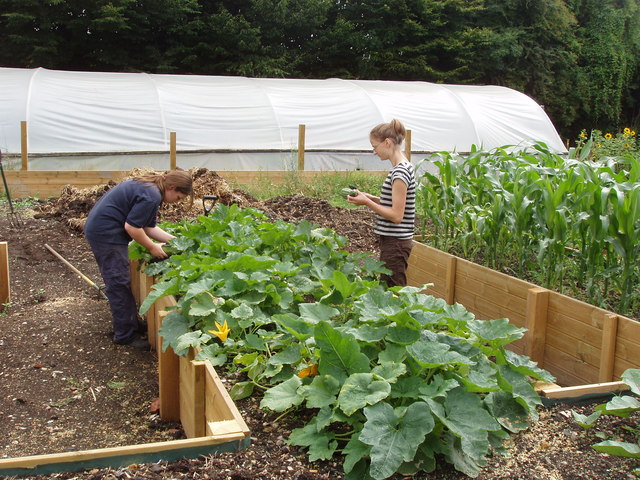
Why accessible design matters in community gardens
Community gardens draw participants across a wide age range and ability spectrum. Standard in-ground plots — flush with surrounding soil at ground level — are difficult or impossible to use for gardeners who use wheelchairs, have limited mobility from arthritis or back conditions, or have difficulty bending at ground level for extended periods. Raised beds address most of these barriers, but only if they are built to appropriate dimensions.
In Canada, several provincial funding programs for community gardens tie grant eligibility to the inclusion of accessible plots. British Columbia's Growing Communities program, Ontario's community garden grants administered through municipal parks departments, and Quebec's urban agriculture support programs have all included accessibility criteria in recent funding cycles. The specifics change year to year, but the trend has been consistent: gardens seeking public funding are expected to demonstrate inclusive design.
Beyond funding requirements, accessible beds widen participation in a practical way. Older adults, who are among the most consistent community garden participants, benefit significantly from beds at an appropriate working height.
Bed height
The working height of a raised bed determines how useful it is for a person in a wheelchair or with limited bending capacity. Two heights serve different use cases:
- 60 cm (approximately 24 inches): The minimum height at which a seated gardener using a standard wheelchair can reach the centre of the bed without leaning over uncomfortably. At this height, beds also work well for standing gardeners who prefer to avoid bending.
- 75–90 cm (approximately 30–36 inches): More comfortable for wheelchair users and appropriate for gardeners who stand but have significant bending limitations. This height also reduces the reach distance required for beds wider than 60 cm.
Some community garden designs use a stepped height — a lower section at 60 cm for standing gardeners who prefer to kneel, and a higher section at 80–90 cm at the ends of the bed for wheelchair access. This works when the bed is long enough (at least 2.4 m) to justify the stepped construction.
Heights above 90 cm become structurally demanding and require more material. They are rarely necessary unless a specific condition makes the 75–90 cm range insufficient.
Bed width
Bed width determines how far a gardener needs to reach to tend the centre of the bed. The maximum practical widths:
- For double-sided access (a path on both sides): 120 cm (4 feet) total width. This allows a person standing or seated to reach the centre from either side without stretching.
- For single-sided access (wall or fence on one side): 60 cm (2 feet) maximum width. This limits what can be grown but is sometimes necessary in constrained sites.
- For wheelchair users specifically: 60 cm maximum reach is the commonly cited guideline. A bed wider than 120 cm with double-sided access will have a centre section that is out of reach for wheelchair users and should be avoided in accessible plot designs.
Standard community garden plots that are not specifically designated as accessible often run 90–120 cm wide anyway, which falls within the accessible range when path access is provided on both sides.
Path dimensions
Path width is frequently the dimension that makes or breaks an accessible garden layout. Minimum dimensions for wheelchair access:
- Single-direction wheelchair passage: 90 cm minimum clear width. This is the bare minimum and provides no room for error or passing.
- Two-way wheelchair passage or manoeuvrability at bed ends: 150–180 cm. This width allows a standard wheelchair to turn around or two wheelchairs to pass.
- T-junction or turning radius: 150 cm × 150 cm clear space at turns and dead ends.
Many community garden sites are retrofitted for accessibility after initial construction, which often results in paths that are technically wide enough in a straight run but too narrow at corners or where beds have been repositioned. When designing from scratch, planning 150 cm paths throughout — rather than the minimum 90 cm — provides practical usability and reduces costly retrofits.

Bed materials
The material used to construct raised beds affects durability, cost, and suitability for food growing. Options commonly used in Canadian community gardens:
- Cedar: The most common choice for Canadian community gardens. Naturally rot-resistant without chemical treatment, cedar typically lasts 10–20 years depending on thickness and site conditions. 2-inch (nominal) cedar boards are standard for beds up to 45 cm high; taller beds benefit from 3-inch stock or double-walled construction.
- Douglas fir (pressure-treated to current standards): Modern ACQ or copper azole pressure treatments are considered acceptable for food production by Health Canada. Earlier CCA-treated wood (identifiable by a greenish colour) should not be used in food gardens. Pressure-treated wood is more affordable than cedar and lasts longer, particularly in contact with soil.
- Composite lumber: Recycled plastic-wood composite boards do not rot and do not leach chemicals. They cost more upfront but have long lifespans. Some municipalities have used composite lumber for accessible garden beds on city-owned land for this reason.
- Galvanised steel: Corrugated galvanised steel panels are an increasingly common choice for taller beds. They are durable, inert, and straightforward to construct. Aesthetics vary — some gardens find steel beds visually compatible with their setting, others prefer wood. Steel beds retain heat more than wood, which can extend the shoulder season in colder regions.
Beds should not be constructed from railroad ties, reclaimed utility poles, or any wood that was previously treated with creosote or CCA. These materials leach compounds into soil that accumulate in food crops.
Surface materials for accessible paths
Path surface determines whether wheelchair access is actually practical. The considerations:
- Compacted gravel or crushed stone: Functional if compacted well, but tends to shift and become uneven over time. Wheelchair wheels can sink into loose gravel, particularly after heavy rain.
- Poured concrete or concrete pavers: The most reliable surface for year-round wheelchair access. Expensive upfront, but maintenance costs are low and accessibility is consistent regardless of weather or season.
- Rubber mulch or rubber pavers: Used in some accessible gardens as a softer alternative to hard surfaces. Provide good traction and some cushioning, but can retain moisture and degrade in UV exposure over several years.
- Packed decomposed granite: Common in drier western Canadian climates. Provides a firm, permeable surface that works reasonably well for wheelchairs if maintained.
The path surface should be level or have a maximum cross-slope of 2% to prevent wheelchairs from drifting sideways. Running slope along the path direction should not exceed 5% for extended distances.
Layout planning
When designing a garden that includes both standard and accessible plots, several layout principles apply:
- Accessible plots should not require traversing non-accessible sections to reach — the route from the garden entrance to each accessible plot must itself be accessible
- Water access points should be positioned to serve accessible plots without requiring wheelchair users to cross rough terrain or unpaved paths
- Tool storage and compost access should be reachable from accessible paths — a composting bay that requires walking across a grass area to reach is not accessible in practical terms
- Where space permits, grouping accessible plots together simplifies infrastructure (shared path widening, adjacent water hookups) and can create a cluster that is easier to maintain as a distinct area
Grant and funding criteria for accessibility
Gardens seeking municipal or provincial funding for accessible construction should review the specific criteria of the applicable program before finalising designs. Common requirements encountered in Canadian community garden funding programs:
- A minimum number or percentage of plots designated as accessible (often two plots, or 10% of total plots, whichever is greater)
- Bed height of at least 60 cm for designated accessible plots
- Path width of at least 120 cm (some programs require 150 cm)
- Hard or compacted surface for accessible routes
- Documentation of the accessible design in the submitted garden plan
Funding bodies including the Public Health Agency of Canada and provincial ministries of health have supported community garden infrastructure grants that include accessibility criteria. Checking with the local municipality's parks or urban agriculture office for current programs is the most reliable way to identify applicable funding.
Construction notes for taller beds
Beds above 60 cm high exert significant outward pressure from soil and moisture. Construction details that matter at this height:
- Corner posts should be set into the ground 30–45 cm below the soil surface, or anchored to a concrete footing, to prevent outward lean under soil pressure
- Side boards should be fastened to the posts with structural screws or through-bolts — butt joints held with standard nails will fail within one or two seasons at this height
- Internal cross-bracing (a horizontal member spanning the width of the bed at mid-height) prevents bowing of long side boards
- A layer of landscape fabric on the interior faces of the boards reduces direct soil contact and extends the lifespan of wood beds
Related: Garden bylaw requirements for accessible plots
Once accessible beds are built, the garden's bylaw document should address how those plots are allocated, what priority is given to applicants with mobility limitations, and how accessible infrastructure is maintained.
Read about garden bylaws